





In this article, we delve into the world of print-on-demand, unveiling the top 9 companies and sites that stand out for their exceptional range of customizable offerings, seamless production processes, and the potential they hold for aspiring entrepreneurs and creative enthusiasts alike.
Key Takeaways
- Shopify: Build a branded print-on-demand storefront and connect it with production partners that automatically sync products, orders, and fulfillment.
- Printful: Use in-house production, strong branding options, and more than 560 customizable products for a streamlined fulfillment workflow.
- Printify: Compare a global network of print providers and access more than 1,300 customizable products with flexible pricing and production locations.
- Spreadshirt: With user-friendly design tools, Spreadshirt empowers entrepreneurs and designers to easily create and sell personalized products, catering to a wide range of creative visions.
- Sellfy: Ideal for digital creators, Sellfy enables the transformation of digital assets into a wide range of physical products through its print-on-demand service.
- Redbubble: Redbubble’s vibrant community and extensive product selection create a platform where artists can showcase their designs and connect with a diverse audience.
- Gelato: Offering a global network of printing partners, Gelato streamlines worldwide distribution and reduces shipping expenses for print-on-demand products.
- Gooten: Gooten’s automated processes and broad product range cater to diverse businesses seeking a hassle-free way to turn designs into physical merchandise.
- Modalyst: Modalyst’s dropshipping approach simplifies the print-on-demand experience, presenting a curated marketplace of customizable products.
What To Look For When Choosing A Print-On-Demand Company
Selecting a print-on-demand company requires several crucial factors to consider to ensure a successful and seamless experience:
- Product Range and Quality: Assess the company’s diversity of products to look for a broad range. Equally important is the quality of these products; they should meet your standards and reflect positively on your brand.
- Customization Options: The ability to upload your designs, manipulate colors, add text, and preview the final product creates a flexible customization process that ensures your creations match your vision.
- Integration with E-commerce Platforms: Seamless integration with popular e-commerce platforms like Shopify or Amazon is a strength. This enables automatic order processing, inventory management, and real-time updates, streamlining your online business operations.
- User-Friendly Interface: A clear, intuitive interface platform simplifies the design and ordering processes. Thus, it reduces the learning curve and enhances efficiency, making managing your products and orders easier.
- Shipping and Fulfillment: Reviewing the company’s shipping options, costs, and estimated delivery times are needed because efficient and reliable shipping plays a vital role in customer satisfaction. Additionally, understand their fulfillment process, ensuring orders are handled promptly and professionally.
9 Best Print-On-Demand Companies
Shopify
Shopify is one of the most popular ecommerce platforms for entrepreneurs who want to build and grow a print-on-demand business. Rather than providing printing and fulfillment itself, Shopify allows sellers to create an online store and connect it with print-on-demand providers that produce and ship products after customers place orders.
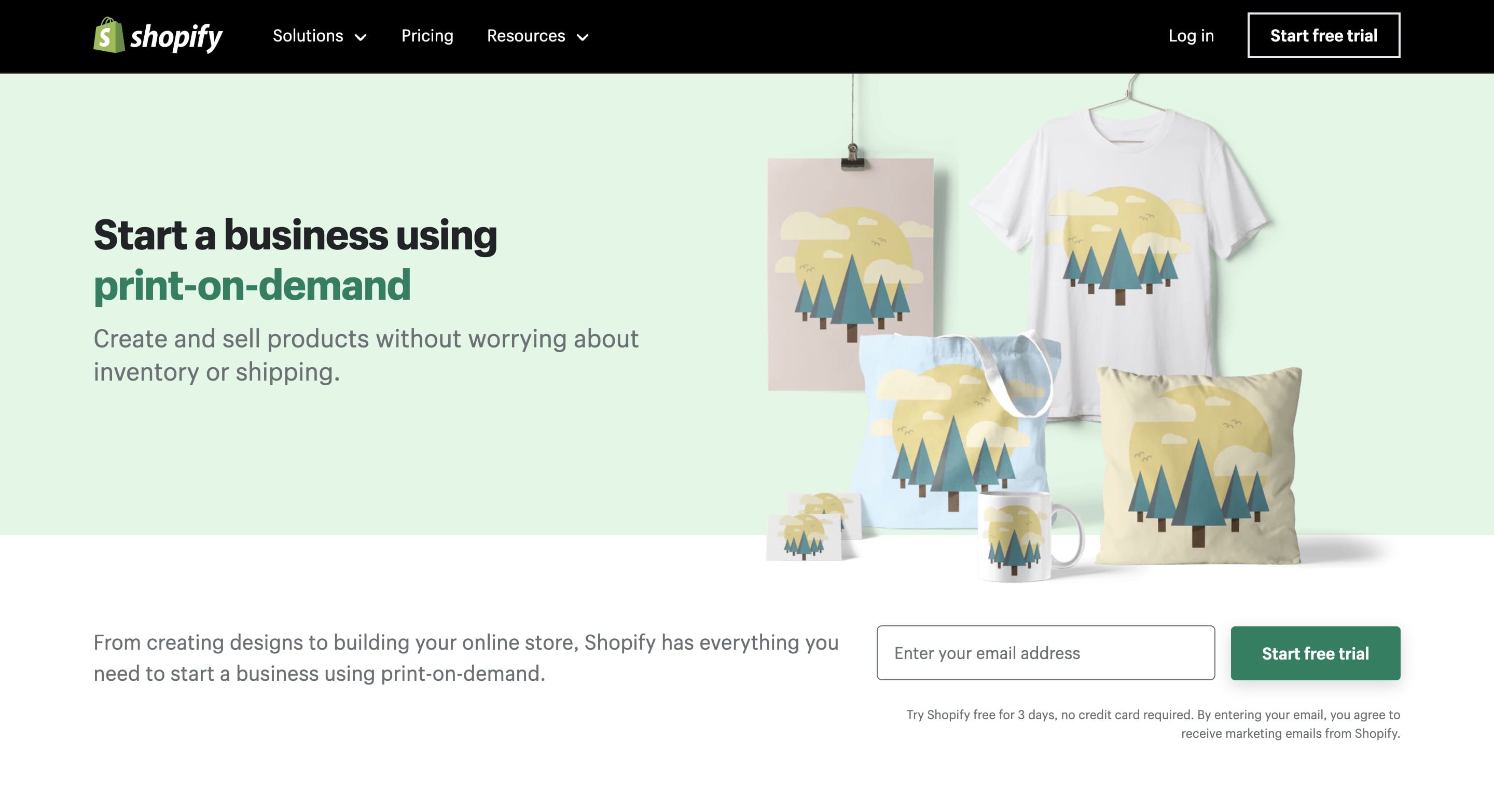
Shopify gives print-on-demand sellers the flexibility to create a branded storefront where they can showcase their custom products. Sellers can choose from a wide range of products, including T-shirts, hoodies, mugs, posters, tote bags, phone cases, and other customizable merchandise, depending on the print-on-demand provider they connect with.
Shopify's extensive app ecosystem makes it easy to connect a store with popular print-on-demand services. These integrations can automatically sync products and orders, helping sellers streamline product publishing, order processing, and fulfillment. This means entrepreneurs can focus on designing products, marketing their stores, and building their brands instead of managing inventory or shipping themselves.
Another advantage of using Shopify for print-on-demand is the level of control it provides over branding and the customer experience. Sellers can customize their store's design, product pages, pricing, collections, and checkout experience rather than relying solely on an existing marketplace.
Once a customer places an order, the connected print-on-demand provider handles production and fulfillment, including printing, packing, and shipping the product directly to the customer. This makes Shopify a flexible option for creators and businesses that want to build a dedicated print-on-demand store without purchasing inventory upfront.
Pricing
Shopify offers several subscription plans, with the Basic plan starting at $29 per month when billed yearly. The cost of running a print-on-demand store can also include the product and fulfillment costs charged by the connected provider, as well as any applicable payment-processing fees or third-party app costs.
Pros
- Easy integration with print-on-demand platforms
- No need to purchase or store inventory upfront
- Wide range of customizable products through third-party providers
- Fully customizable online storefront
- Strong branding and marketing capabilities
- Automatic product and order syncing with supported apps
- Supports multiple sales channels
- Scalable for growing print-on-demand businesses
Cons
- Monthly subscription required
- Print-on-demand products require separate fulfillment costs
- Additional costs may apply for third-party apps
- Sellers are responsible for marketing and attracting customers
- Product quality and shipping depend on the selected print-on-demand provider
Who should use Shopify?
- Print-on-demand entrepreneurs who want to build their own branded online store rather than rely entirely on marketplaces
- Artists and designers who want to sell their designs on apparel, accessories, home decor, and other customizable products
- Established brands looking for greater control over their storefront, customer experience, and print-on-demand fulfillment
- Entrepreneurs who want to scale a print-on-demand business by combining Shopify's ecommerce tools with third-party production and fulfillment services
Printful
Printful is a print-on-demand and fulfillment platform that helps businesses create and sell custom products without purchasing inventory upfront. Once connected to an online store, Printful automatically receives orders and handles production, packing, and shipping directly to customers.
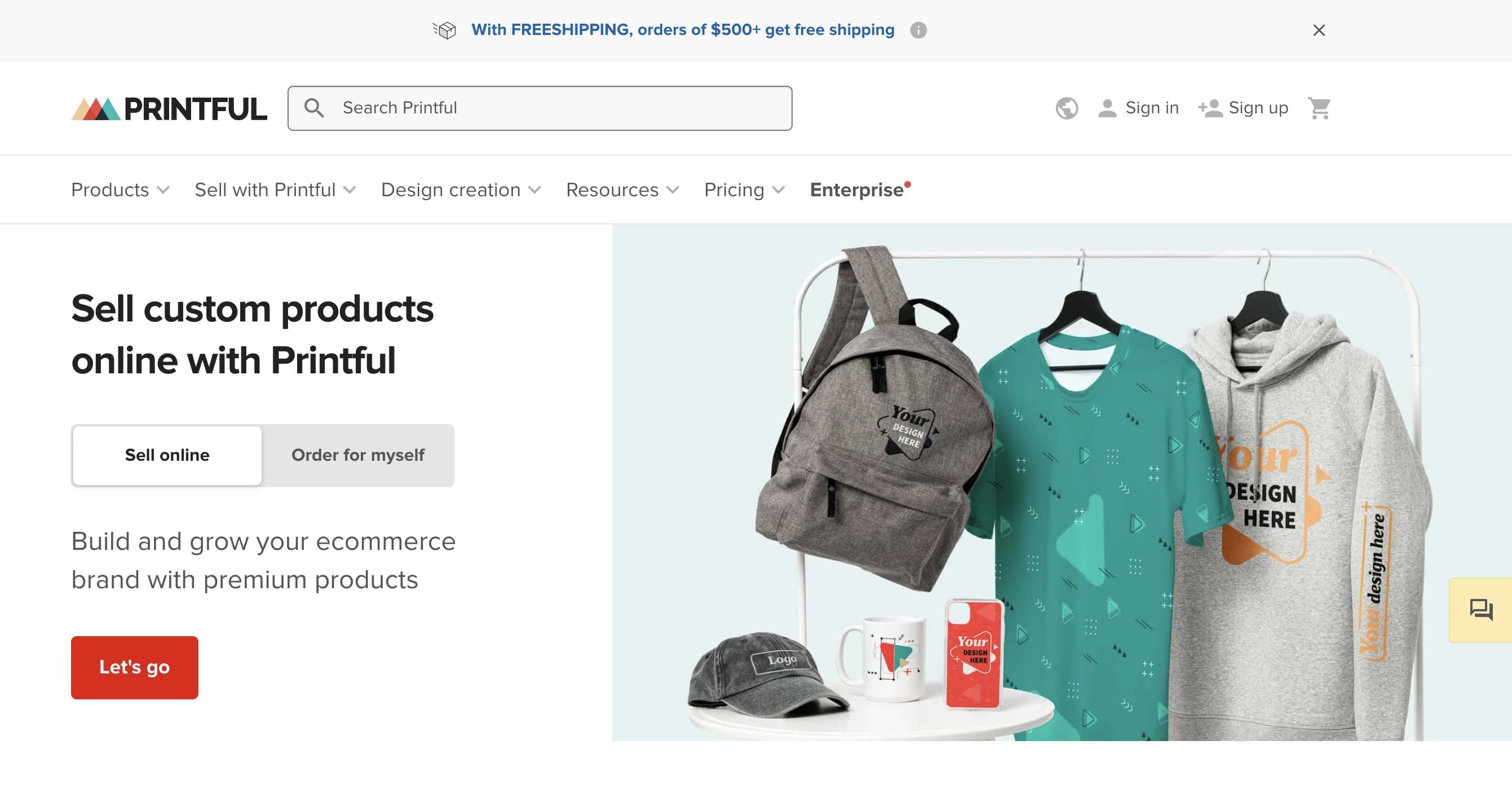
Its catalog includes more than 560 customizable products across categories such as apparel, accessories, custom-designed hats, footwear, drinkware, wall art, home decor, and pet products. The free Design Maker and Mockup Generator make it easy to prepare designs, preview products, and create listing images without additional software.
Printful supports several production techniques, including direct-to-garment printing, direct-to-film printing, embroidery, sublimation, and all-over printing. Sellers can also order discounted samples to assess print quality before making products available to customers.
Branding features such as custom inside and outside labels, branded packaging, and pack-ins can help businesses create a more consistent customer experience. However, availability and additional fees depend on the product and fulfillment location.
Printful integrates with more than 20 ecommerce platforms and marketplaces, including Shopify, WooCommerce, Etsy, Amazon, TikTok Shop, Wix, Squarespace, and eBay. Orders are automatically imported for fulfillment, allowing sellers to manage their storefront while Printful handles production and delivery.
Pricing
- Free: $0 per month, with access to the product catalog, design tools, integrations, and automatic fulfillment
- Printful Growth: $24.99 per month, with discounts of up to 33% on selected products and additional branding and sample-order benefits
- Enterprise: Custom pricing for high-volume businesses
- Product, customization, shipping, and applicable taxes are charged separately when an order is placed
Pros
- Free to start with no minimum order requirements
- More than 560 customizable products
- User-friendly Design Maker and Mockup Generator
- In-house production and quality-control processes
- Multiple printing and embroidery techniques
- Strong custom-branding options
- Integrations with major ecommerce platforms and marketplaces
- Automatic order fulfillment and worldwide shipping
Cons
- Base product prices can be higher than those of some competitors
- Branding, additional print placements, and embroidery digitization may incur extra fees
- Product and branding availability can vary by fulfillment location
- Sellers have less control over the production process than with in-house manufacturing
Who should use Printful for print-on-demand?
- Artists and designers who want to sell their work on apparel, posters, mugs, and other products
- Online creators looking to launch professionally branded merchandise
- Fashion and apparel brands that prioritize consistent product quality
- Businesses that want custom labels, branded packaging, and other branding options
- Shopify merchants seeking a streamlined, largely hands-off fulfillment process
Printify
Printify is an on-demand printing platform that connects online sellers with a global network of independent print providers. It enables merchants to create and sell custom products without managing inventory, printing equipment, or order fulfillment.
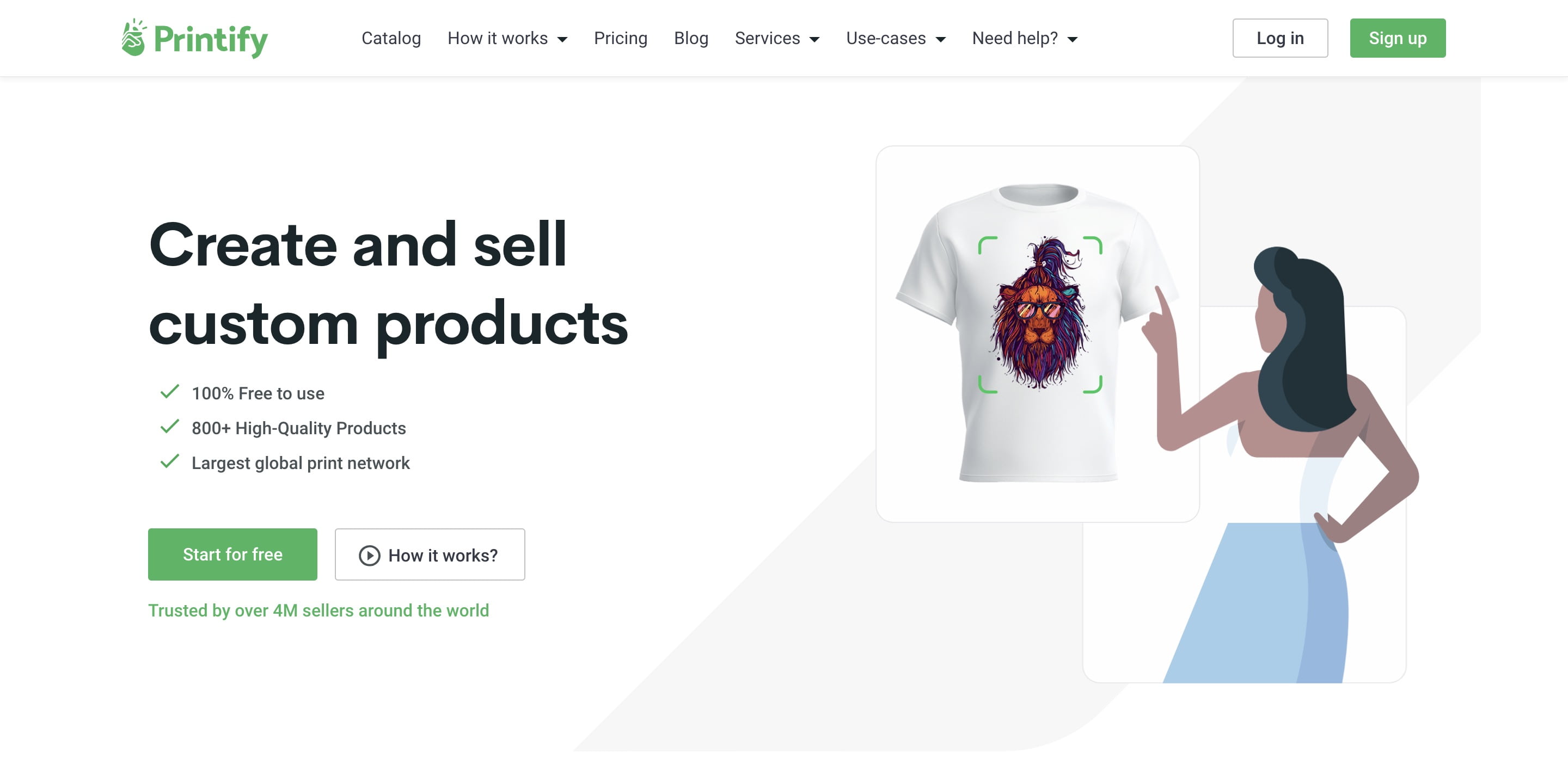
The platform offers more than 1,300 customizable products, including T-shirts, hoodies, personalized shoes, accessories, phone cases, mugs, home decor, and pet products. Its free Product Creator and Mockup Generator allow sellers to upload designs, preview products, and prepare images for their online listings.
Depending on the selected product and print provider, available production methods include direct-to-garment printing, direct-to-film printing, sublimation, embroidery, and all-over printing. Sellers can compare providers based on price, location, product availability, shipping times, and performance ratings, giving them greater control over their fulfillment setup.
When a customer places an order, Printify automatically sends it to the selected provider for production and shipping. Its geographically distributed network can help sellers serve customers in different markets and select providers closer to their target audience.
Printify integrates with leading ecommerce platforms and marketplaces, including Shopify, Etsy, WooCommerce, Wix, Squarespace, Amazon, TikTok Shop, and eBay. Products can be published directly to a connected store, while order information is synchronized for automatic fulfillment.
Pricing
- Free: $0 per month, with up to five connected stores and unlimited product designs
- Premium: $39 per month or $299 per year, with product discounts, up to ten stores, and additional seller support
- Product, customization, shipping, and applicable taxes are charged separately when an order is placed
Pros
- Free to start with no minimum order requirements
- Catalog of more than 1,300 customizable products
- Large global network of print providers
- Ability to compare providers by price, location, and performance
- Competitive product pricing and strong margin potential
- User-friendly product creation and mockup tools
- Multiple printing and embroidery options
- Integrations with major ecommerce platforms and marketplaces
- Automatic order routing and fulfillment
Cons
- Product quality and shipping times may vary between print providers
- Sellers may need to order samples when evaluating a new provider
- Branding options vary by product and provider
- Managing multiple providers can require more oversight
- The Premium plan requires a monthly or annual subscription
Who should use Printify for print-on-demand?
- Artists and designers who want access to a broad range of customizable products
- Online creators launching merchandise without investing in inventory
- Ecommerce sellers who want to compare multiple print providers
- Dropshipping businesses and startups focused on competitive pricing and profit margins
- Shopify merchants who want flexible production locations and fulfillment options
Spreadshirt
Spreadshirt, another leading print-on-demand platform based in Germany, stands out as a go-to destination for individuals and businesses seeking high-quality, customizable products with its innovative features and extensive product offerings.
Spreadshirt boasts an impressive collection of over 250 products, including apparel, accessories, home decor, and beyond, that are eco-friendly and responsible. The platform’s commitment to quality ensures that each product embodies the envisioned design with vivid, lasting prints.
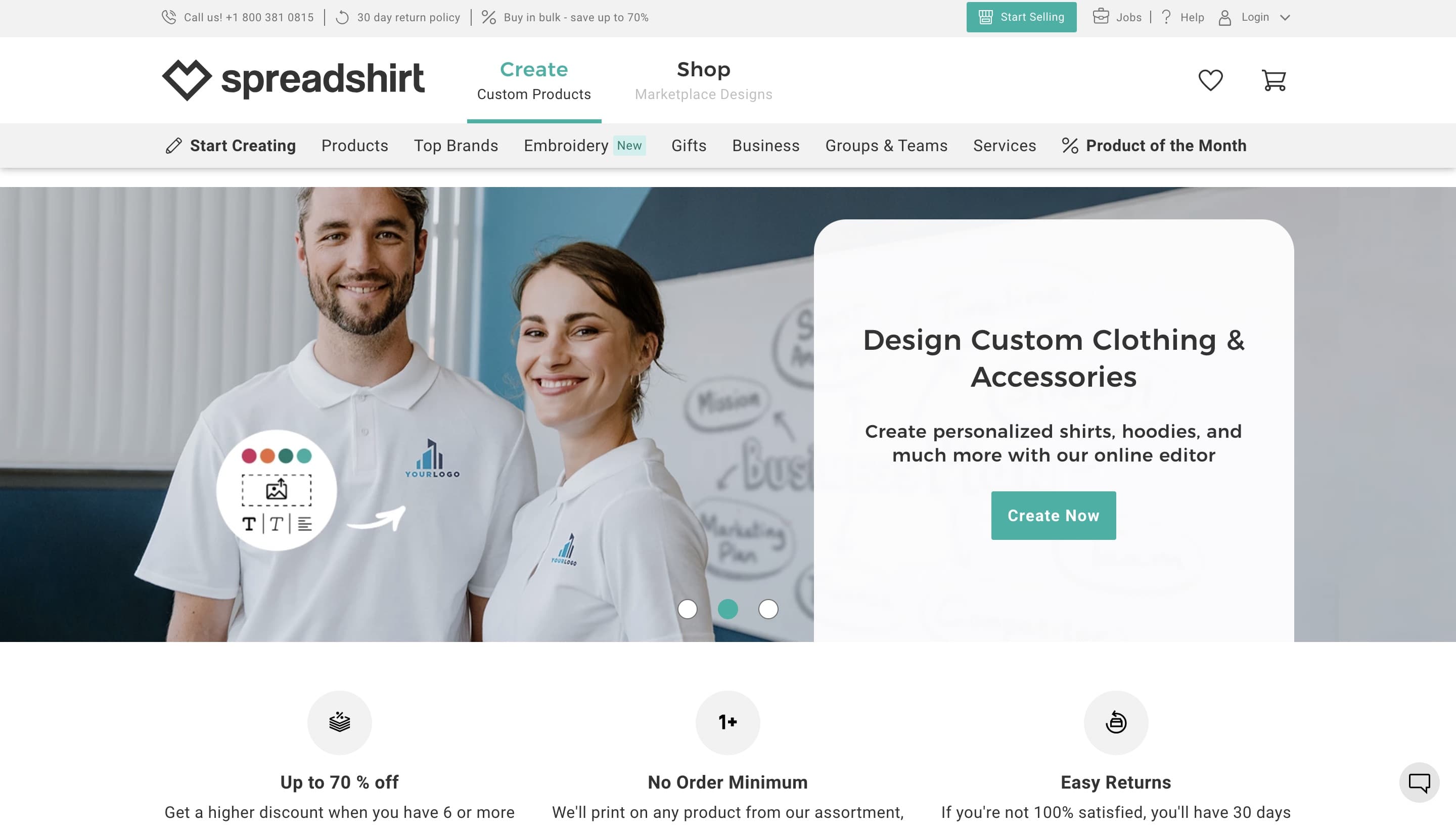
Spreadshirt’s seamless integration with major e-commerce platforms, including the popular Shopify, Wix, and Woo e-commerce, streamlines the selling process by automatically syncing orders and managing inventory.
From stylish t-shirts, hoodies, and hats to magnets, mugs, and aprons, their extensive product range ensures that creators can find the perfect canvas for their designs. The platform provides customizable shops for creators to establish their brand identity and showcase their unique designs to a global audience.
Once an order is placed, Spreadshirt handles printing, quality control, and shipping directly to the customer. This streamlined process eliminates the need for creators to manage inventory or shipping logistics, allowing them to focus on their creativity and business growth.
Pricing
The Spreadshirt is free to use. The price of a product comprises the base product cost and the printing cost. For example, if a men’s premium t-shirt costs $12 and the first print area is $8, the total price will be $20. It would cost $9.00 for every additional print area since the second print.
The commission fee can be 20-40% if you open the shop and sell your products. Moreover, you could save up to 70% when ordering customized products and designs in bulk from its community.
Pros
- Free-to-use
- A wide selection of product types
- Diverse customization options
- Existing marketplace
- Commission fee when opening a shop
- Mobile app to track on both iOS and Android
Cons
- Less marketing tools for shop owners
- Color option limitation
Who should use Spreadshirt?
- Artists, designers, and hobbyists who want an easy way to create and sell their custom designs on apparel and accessories.
- Niche businesses targeting specific interests, hobbies, or communities.
- Event Organizers who need to create branded merchandise for attendees.
- Local businesses, cafes, or shops looking to offer branded merchandise to their customers without investing in extensive inventory.
- Nonprofit Organizations looking to create merchandise for fundraising campaigns, spreading awareness, and rallying supporters.
RedBubble
RedBubble, a pioneering Australian print-on-demand company, is renowned for its distinctive features that empower creators and artists to sell their unique products on the site. Until now, they have connected over 700,000 artists and designers across the planet.
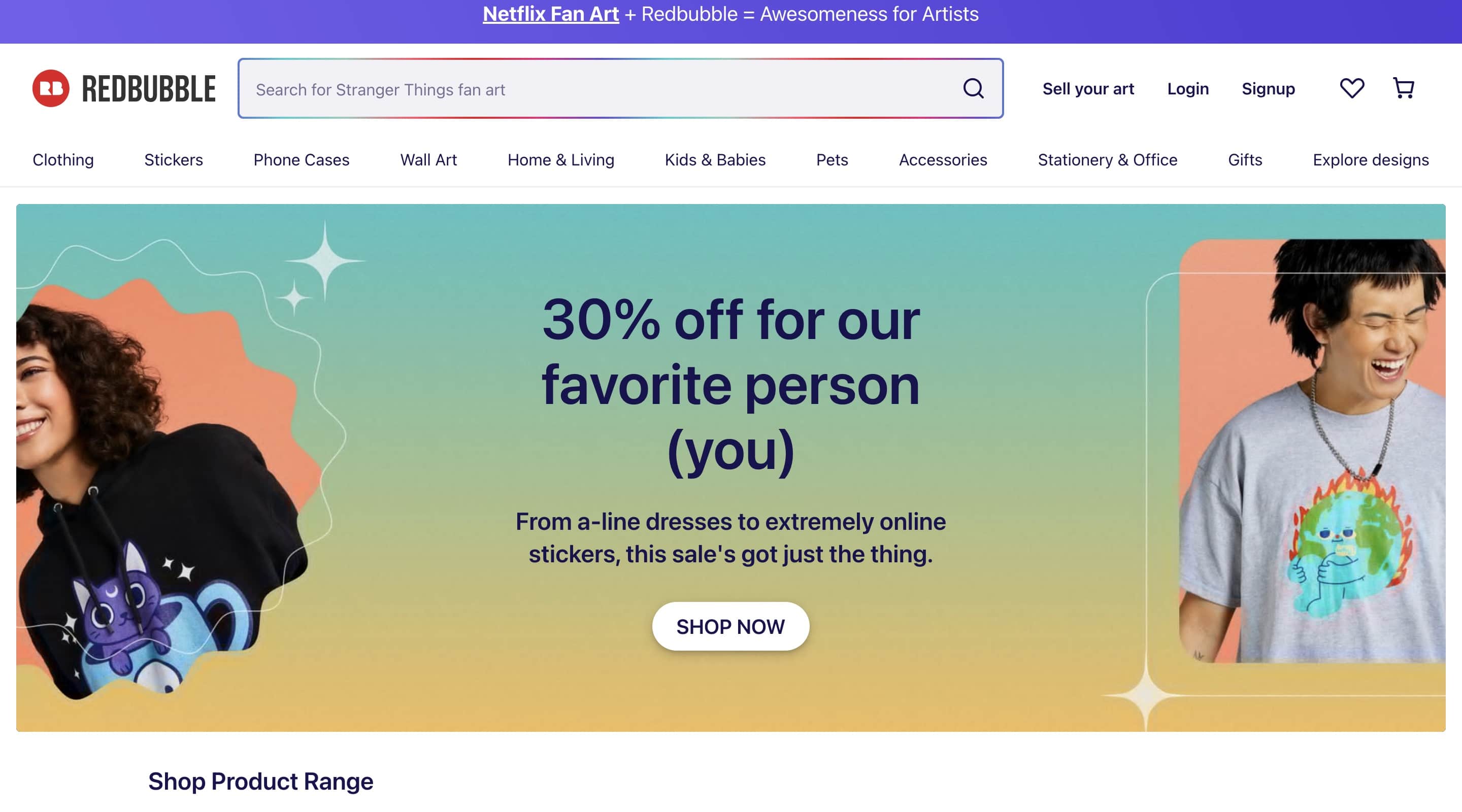
RedBubble takes pride in its expansive collection of over 60 quality product types, spanning from apparel and accessories to wall art and stationery. Whether striking phone cases, captivating wall art, or intricately designed stickers, RedBubble’s extensive offerings foster unique creations, committing to social responsibility.
Navigating the Redbubble platform is remarkably straightforward; in most instances, products can be shipped globally. While Redbubble doesn’t offer integration with external website platforms, utilizing its proprietary platform is still viable.
RedBubble offers a supportive ecosystem where artists, designers, and entrepreneurs can flourish. It provides a platform for creators to establish their brand identity, allowing them to showcase their artistry to a global audience and earn recognition for their work.
Naturally, Redbubble also takes care of the fulfillment process, overseeing the printing and shipping of your orders worldwide through its extensive network of printing collaborators. While the printing quality is usually satisfactory, it’s worth noting that it can vary based on the specific third-party producer engaged during that period.
Pricing
The retail price comprises the base price and the artist margin. The amount you get paid with Redbubble will depend on the margin you choose to earn on your sales. Typically, the artist’s default margin is 20%, and you are free to adjust the rate.
As an example, the base price of a phone case is $20. By adding a markup of $4, the platform would list and sell it for $24.
Recently, they have introduced new account tiers and fees applied to each type of account, which are Standard, Pro, and Premium. You could visit the website for more details about its print-on-demand business model.
Pros
- Free to use
- User-friendly interface
- Tons of customization options
- A great variety of products
- Reasonable prices
- Great promotional materials
- Existing marketplace
Cons
- Promote your artwork yourself
- Low profit
- Difficult to build a memorable brand
- Clumsy link to your website
Who should use Redbubble?
- Visual artists who are looking to showcase their artwork to a global audience.
- Graphic designers who are expanding their reach beyond digital media and offering unique merchandise.
- YouTubers, streamers, and podcasters who create branded merchandise related to their content, connecting with their audience.
- Online communities and fandoms create and sell merchandise that resonates with their members.
- Nonprofit organizations focus on raising awareness or funds by selling merchandise.
See more: Shopify vs Redbubble for Print-on-Demand Businesses
Sellfy
Sellfy, one of the best e-commerce platforms for print-on-demand, is popular in the European and Asian markets. Besides initially focusing on digital products, the company now offers print-on-demand services. It also empowers great features to build up a beautiful storefront in a few minutes.
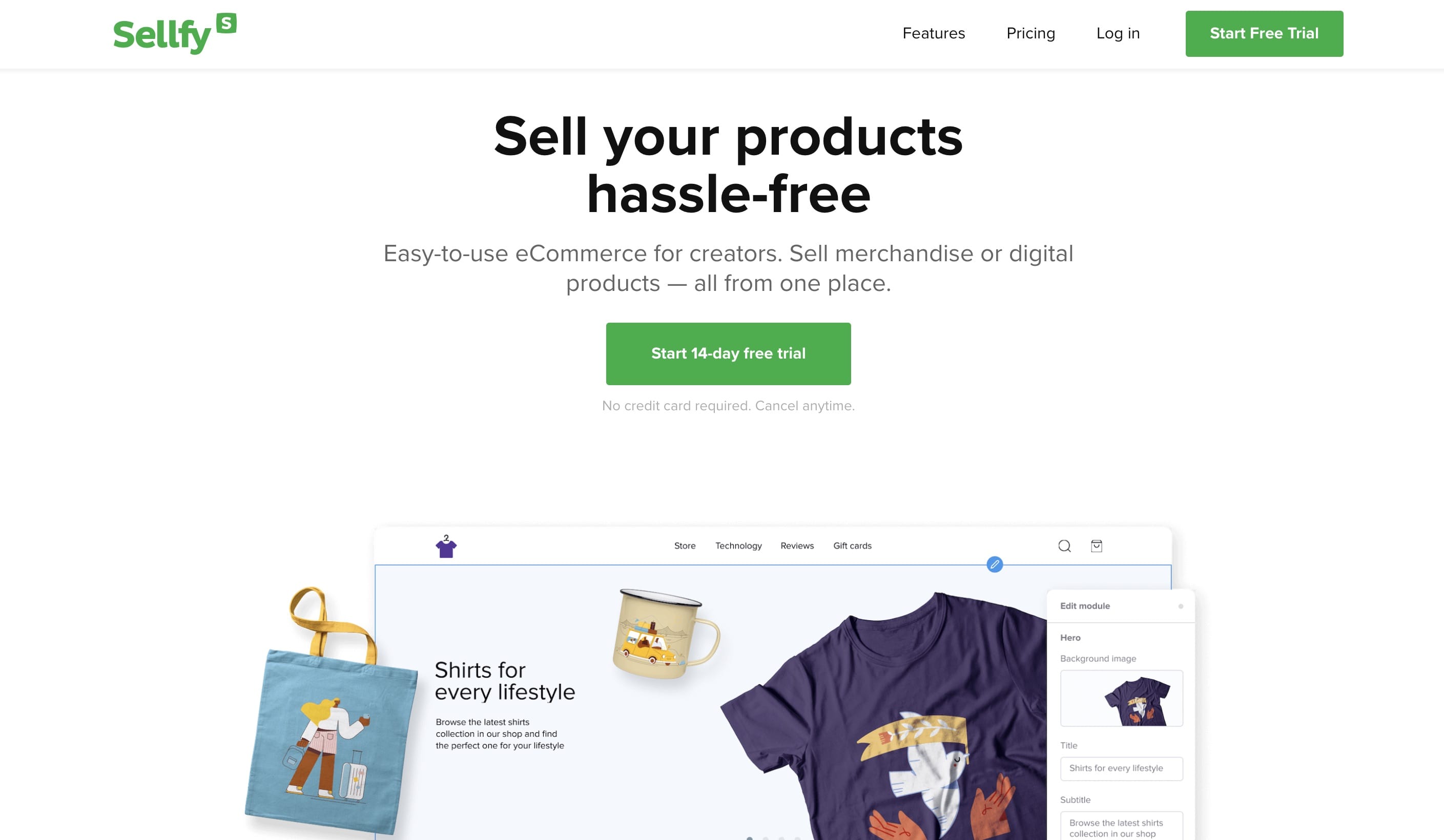
Sellfy caters to a diverse array of print-on-demand product categories, encompassing apparel, bags, stickers, mugs, and phone cases, available in a range of colors and sizes. Alongside graphics and text, you have the option to incorporate custom labels and embroidery into clothing items.
Sellfy employs the DTG (Direct to Garment) printing technique, ensuring high-resolution prints using CPSIA-compliant, water-based inks that meet safety standards for children’s clothing. You can request a sample to assess the quality firsthand.
Sellfy is more than a platform; it’s a creative hub that nurtures the entrepreneurial spirit. Artists, designers, writers, and creators of all kinds can establish digital storefronts to showcase their unique offerings.
Sellfy offers built-in marketing and analytics tools. Moreover, upon receiving an order, they will take care of fulfillment, which handles the printing and shipping processes, invoicing you for the base item cost, applicable taxes, and shipping expenses.
You have the flexibility to integrate product links seamlessly across various platforms, including websites you’ve established on platforms such as Squarespace, Wix, WordPress, and others.
Pricing
You can design as many as you wish and offer merchandise without any initial costs on your part. After the order is placed, Selly would charge the base price, taxes, and shipping costs under “billing.”
You need to subscribe to the paid plan to maintain your online store. The price would range from $29 to $159 when paying annually. It can save up to 30% if billed for two years. A 14-day free trial is available for starters to try premium features. Sellfy also offers a 30-day money-back guarantee.
Pros
- Complete control over the POD store
- Built-in marketing and sales tools
- Different product categories
- A customized online storefront
- Wide customization of the product options
- Social media integration
Cons
- Drive all your own traffic and sales
- Can not return or exchange POD merchandise.
- Costs of upgrading to more advanced tools
Who should use Sellfy?
- Authors, musicians, artists, and course creators who want a user-friendly platform to sell their digital products.
- Instructors and educators who want to sell online courses, tutorials, and educational content.
- Musicians who want to sell their music tracks, albums, and merchandise directly to their fans bypass traditional distribution channels.
- Small businesses or entrepreneurs selling digital and physical products such as ebooks, printables, and crafts.
- Designers, photographers, and freelancers who are looking to monetize their creative work, such as graphics, photography, and design resources.
Gelato
Gelato is a prominent global print-on-demand solution, distinct from an e-commerce platform. In contrast to Sellfy, Gelato lacks a store-building feature. However, if you’ve already constructed your store on platforms like Shopify or WooCommerce or are inclined to sell on marketplaces like Etsy, opting for Gelato is a favorable choice.
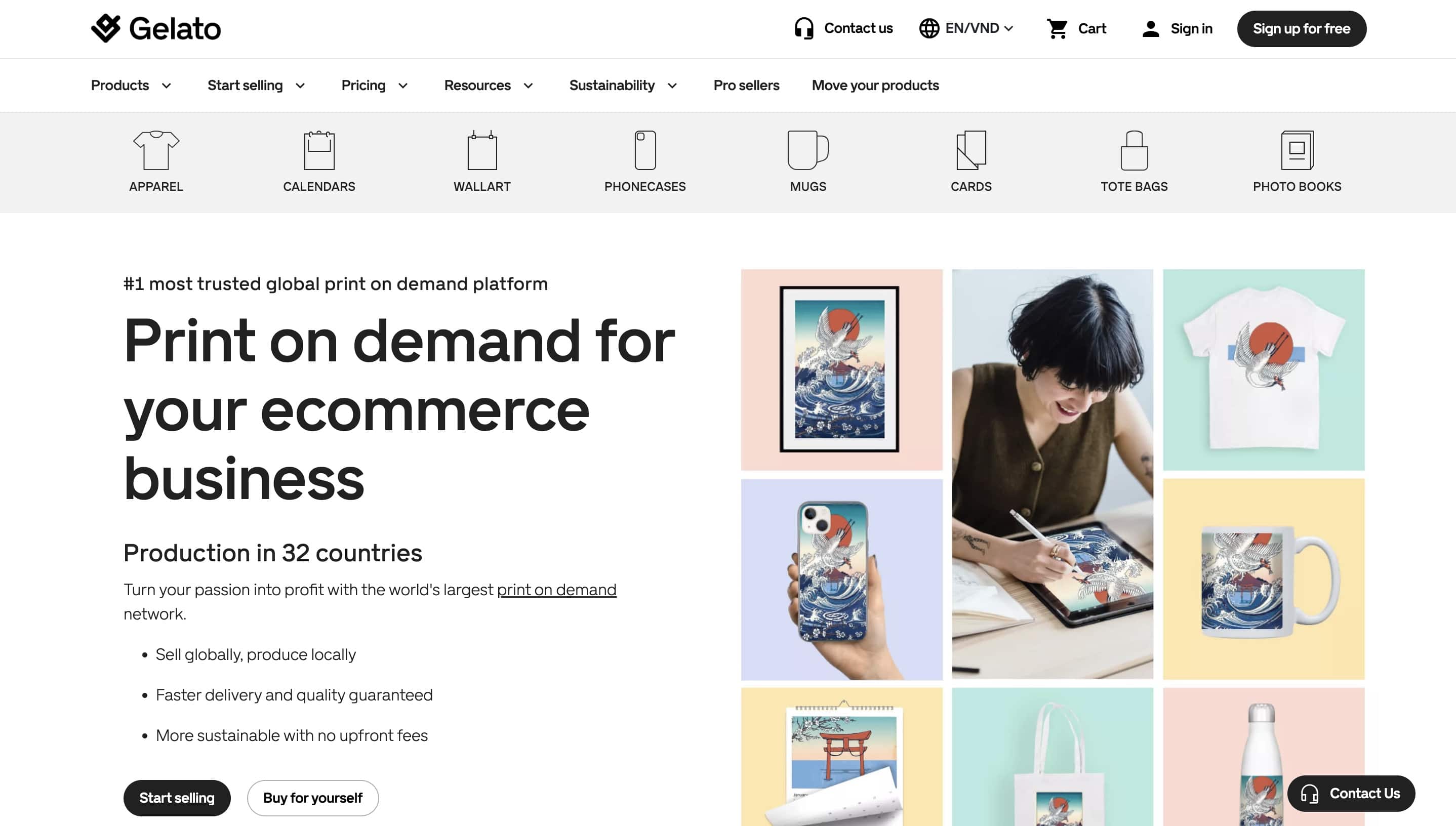
Gelato empowers creators to transform their designs into various tangible products in over 40 categories, including apparel, mugs, phone cases, wall art, calendars, and many more.
Gelato is recognized for its strong dedication to minimizing its environmental footprint. This ethos is evident in their printing services, which are intentionally crafted to prioritize eco-friendliness.
Gelato takes pride in delivering premium print products that come with a range of customizable choices. Using cutting-edge digital printing technology, the company ensures the creation of vivid and precise prints. Additionally, Gelato offers a diverse selection of paper stocks and finishes to cater to the unique requirements of various projects.
What’s particularly impressive is that Gelato collaborates with 130 printing facilities across 32 countries. Moreover, orders are seamlessly linked to the nearest production partner based on the customer’s location.
Rather, it functions as a fulfillment service that seamlessly integrates with your website, enabling you to initiate the sale of POD merchandise directly through your established online store.
Pricing
Gelato offers subscription plans. A free tier is available for anyone interested in kickstarting their print-on-demand merchandise sales without incurring monthly fees; you only pay for the items you sell.
Additionally, several premium tiers offer extra advantages such as shipping discounts, product mockups, stock images, and more, starting at $14.99 monthly and 30% off standard shipping.
Pros
- Ideal prices with the subscription model
- Wide product selection
- Worldwide fulfillment centers
- Supports a wide range of e-commerce platforms
- Lightning-fast shipping times
- No minimum order threshold
Cons
- Require paid plan for advanced tools
- Limit special printing technologies
Who should use Gelato?
- Businesses targeting a global audience
- Multinational companies who are looking to maintain a consistent brand presence worldwide.
- Creative professionals who are seeking to sell their artwork on a wide range of products.
- Businesses with a focus on sustainability.
- New businesses with limited resources
Gooten
Gooten stands out as a remarkable frontrunner in the realm of print-on-demand enterprises. If you’re searching for a platform that can provide all the fundamental services required to market your designs online successfully, Gooten is the ideal choice for your business.
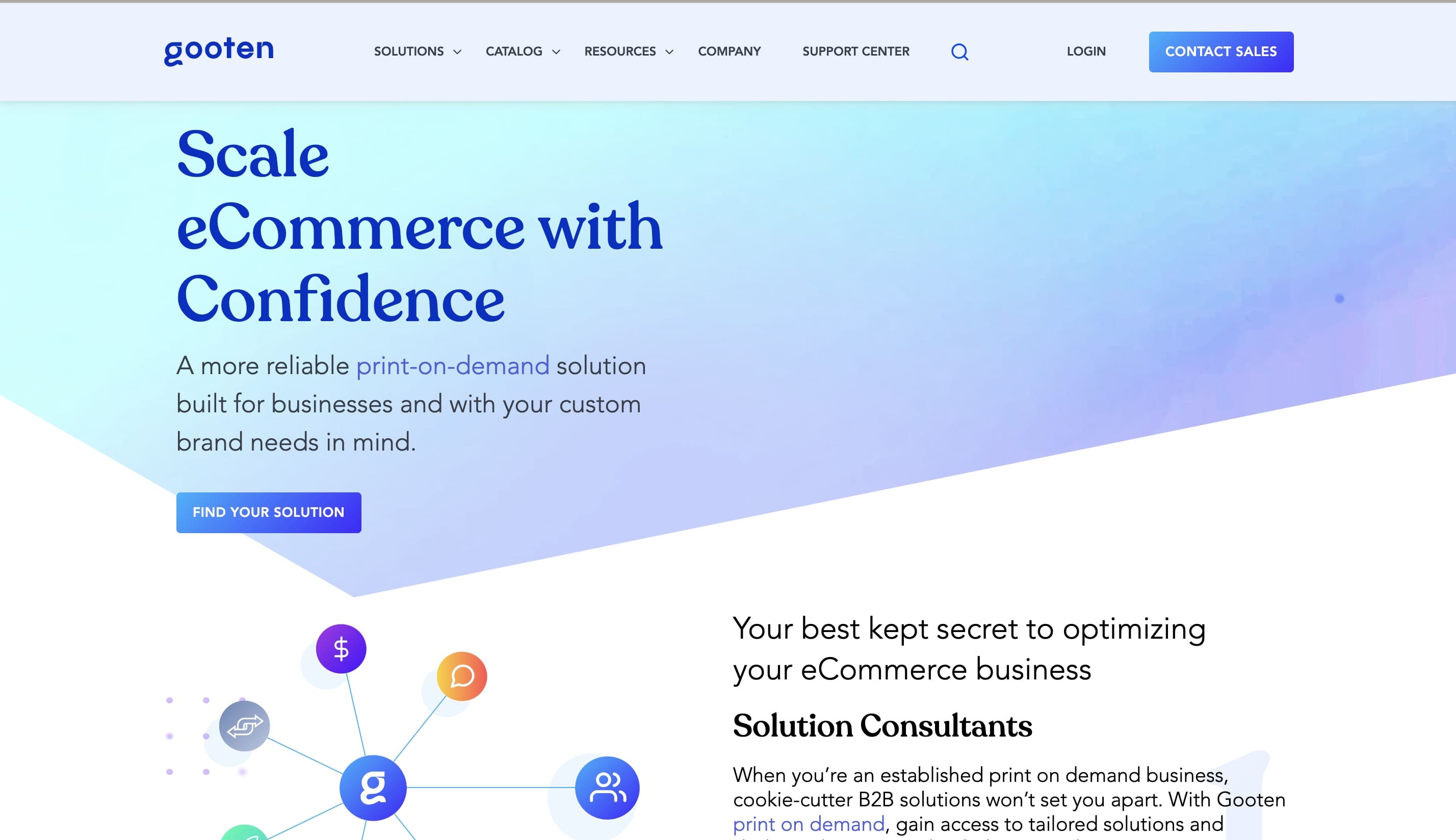
It encompasses an expansive catalog of over 250 lucrative and popular print-on-demand products, ranging in many essential fields.
Gooten acts as a middleman, working with various printers around the world. Moreover, its integration with leading e-commerce platforms, such as Shopify, Etsy, and BigCommerce, enhances operations and automatically routes orders. Users can rely on Gotten’s advanced API to plug into any of its partners.
Gooten takes care of all the fulfillment services on your behalf, which include printing your products and efficiently delivering them to your customers without requiring minimum order volumes.
Gooten offers the choice of employing flat shipping rates, encompassing fulfillment expenses and limited to domestic orders. Alternatively, you have the option to compute shipping charges based on the customer’s location and your chosen delivery method.
Regarding order fulfillment, when a purchase is made, Gooten accepts the order and holds it for a brief two-hour period. Subsequently, it undergoes automated routing for production, a process that can take up to four business days. The inclusion of tracking information occurs when one of Gooten’s vendors generates a shipping label, which is subsequently scanned by the shipping carrier.
Pricing
There are no membership fees or hidden costs associated with using Gotten. It only charges for the cost of your item and its shipping when the order is placed. The standard shipping cost applies no matter how much you charge your customers.
Gooten offers products with starting prices of around $7. However, the Pro and Elite VIM categories may engage in partnerships to explore potential discounts on product sales eligibility.
Pros
- Wide product variety
- Straightforward user interface
- Seamless integration with big e-commerce platforms
- Pricing prediction
- Great built-in features
Cons
- A little pricey
- Lack of marketing support
Who should use Gooten?
- Businesses with an existing store want to integrate with leading e-commerce platforms.
- Entrepreneurs or dropshippers looking to start an online store without the need to manage inventory.
- Creative professionals who design graphics, artwork, and illustrations
Modalyst
Modalyst is a curated B2B marketplace and a giant US print-on-demand dropshipping company. As stated, it has served up to 350,000 e-commerce stores in total, with its core of winning dropshipping products.
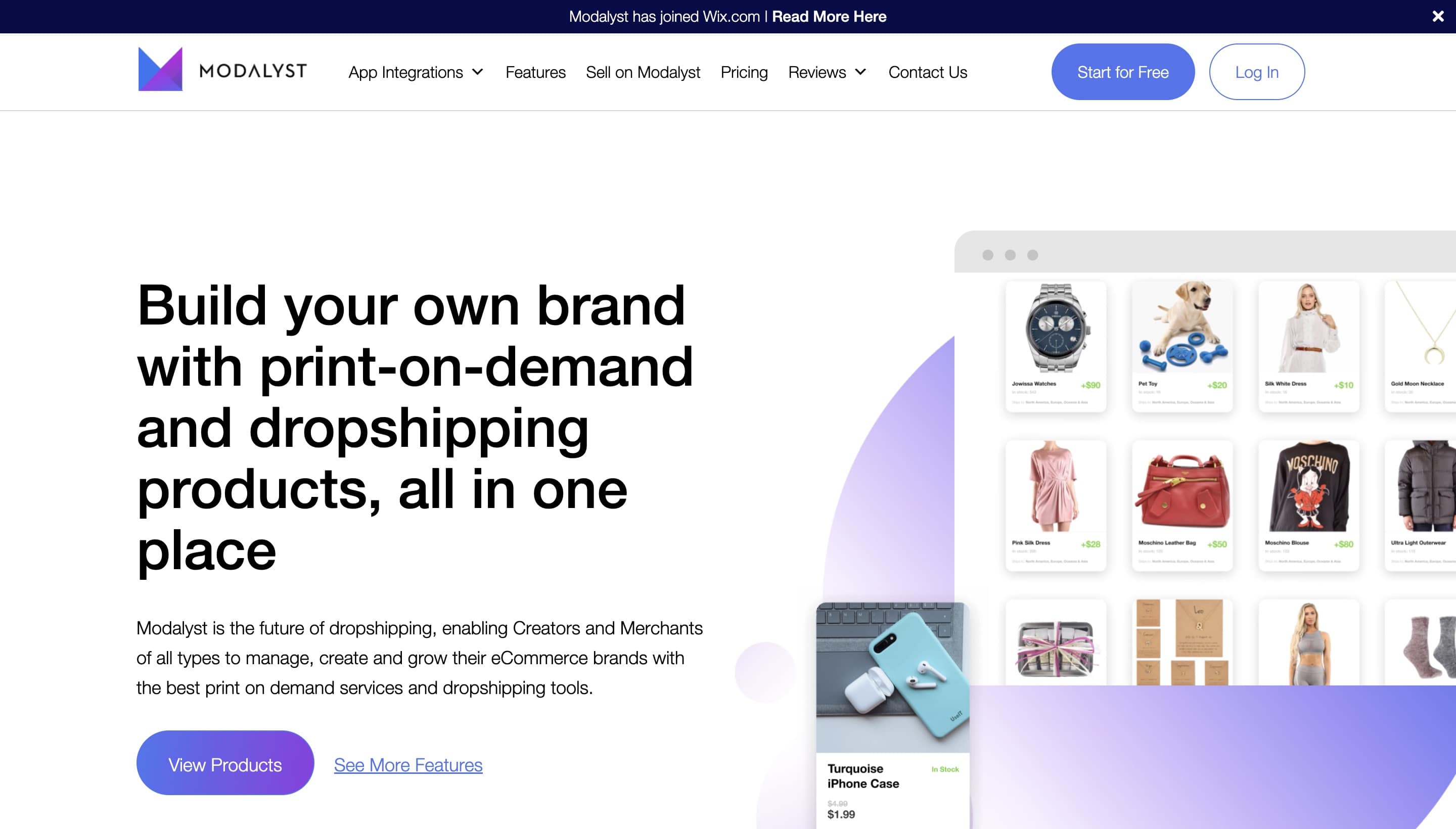
It gives e-commerce businesses access to over 3,000 product categories, with over 10 million products added to the virtual storefront, including home accessories, pet toys, accessories, jewelry, cosmetics, and many more.
Modalyst establishes direct links with Shopify, Wix, and BigCommerce stores, facilitating seamless connectivity for ecommerce enterprises. It bridges the gap between businesses and suppliers, enabling the direct shipment of products to customers.
What sets Modalyst apart is its commitment to going the extra mile. It distinguishes itself by providing US-based suppliers, rapid shipping durations, seamless integration with Alibaba and AliExpress, and an encompassing platform streamlining management tasks.
Similar to rival platforms like Printify and Printful, Modalyst simplifies the print-on-demand process, providing all the necessary components for customer acquisition, including packing slips and a range of delivery choices.
Pricing
Similar to many print-on-demand solutions, Modalyst requires zero upfront inventory costs to start dropshipping today. However, it charges 5% for every transaction made.
The starting cost to upgrade your store and scale your business is $35 per month. You can save up to $25 when paying annually. The most expensive Pro plan will make the transaction fee drop to 2% per sale.
Pros
- Intuitive admin dashboard view
- Tons of product options
- Thousands of US-based suppliers
- Good policies
- Integrates with big e-commerce sites
Cons
- High transaction fees
- Less integration compared to others
Who should use Modalyst?
- Wix merchants, as Wix currently owns Modalyst
- Dropshipping businesses
- Businesses already selling online can diversify their product range
- Marketplace sellers
- Fashion designers
- Startups and side hustlers
How to Choose The Best Print-on-Demand Company?
Among the wide selection of print-on-demand solutions on the market, how can you choose the one best suited for your business? The fact is that you should follow the business’s goal to get what you want at the company or site you pick. So, we have defined some factors that you need to consider when looking for the perfect partner.
- Profitable: Prioritize a POD company that offers competitive pricing, allowing you to maintain healthy product profit margins.
- Extensive product range: Look for a company with a diverse selection of products, from apparel to home decor, enabling you to cater to a broader audience and expand your offerings.
- Superior quality: Quality is paramount. Choose a POD partner that consistently produces high-quality prints and products to uphold your brand’s reputation.
- Swift delivery: Timely delivery is crucial to customer satisfaction. Opt for a company with a track record of fast and reliable shipping to meet your customers’ expectations.
- Multiple ecommerce integrations: Seamlessly connect your POD products with your chosen ecommerce platforms, such as Shopify, WooCommerce, or Etsy. This streamlines your operations and enhances your online store’s functionality.
- Good reviews and social proof: Research customer reviews and testimonials about the POD companies you’re considering. Positive social proof indicates a company’s reliability and can give you valuable insights into its performance and customer satisfaction.
Print Mockup Company
Print mockup companies play a vital role in the print-on-demand journey by visually showcasing products before selling them without the need for photoshoots. They offer a diverse range of high-quality mockup templates that highlight designs on various products, saving time and effort.
Placeit
The most popular mockup business offers a wide selection of professionally crafted mockup templates for apparel, mugs, phone grips, and more. Pricing starts at $9.99/month.
Mockup World
Provides a collection of free and premium mockups covering different product categories. Offers a range of options to suit different budgets and design needs.
Mockup Generator
Today, there is an abundance of online mockup tools available, spanning both free and paid options. However, it’s important to note that not all of these tools provide the quality and functionality you might desire. Take your time to explore and find the best fit, or consider opting for print-on-demand companies that offer mockup generators as part of their services.
Which Print-on-Demand Company Should You Choose?
The choice of a print-on-demand company depends on your specific business needs and priorities.
If you’re prepared to launch your merchandise into the market, numerous reputable print-on-demand companies offer transparent pricing models to assist you.
If you love art or are passionate about art products, you can visit Redbundle to admire huge artworks from over seven thousand artists worldwide. Each one encompasses a unique vibe so that you will be greatly inspired.
On the other hand, Printful or Sellfy are preferred for those aiming to establish a comprehensive online store featuring seamless integrations with prominent e-commerce platforms such as Shopify and WooCommerce.
Or else, for merchants seeking a dropshipping print-on-demand company where thousands of US suppliers are available, Modalyst must be a great choice.
Bottom Line
In the evolving e-commerce landscape, these top 9 Print-on-demand companies and sites stand out as pioneers, empowering individuals and businesses to turn creativity into tangible products. Whether you’re an artist, an entrepreneur, or simply seeking one-of-a-kind items, these platforms offer a gateway to limitless possibilities in the world of custom printing.